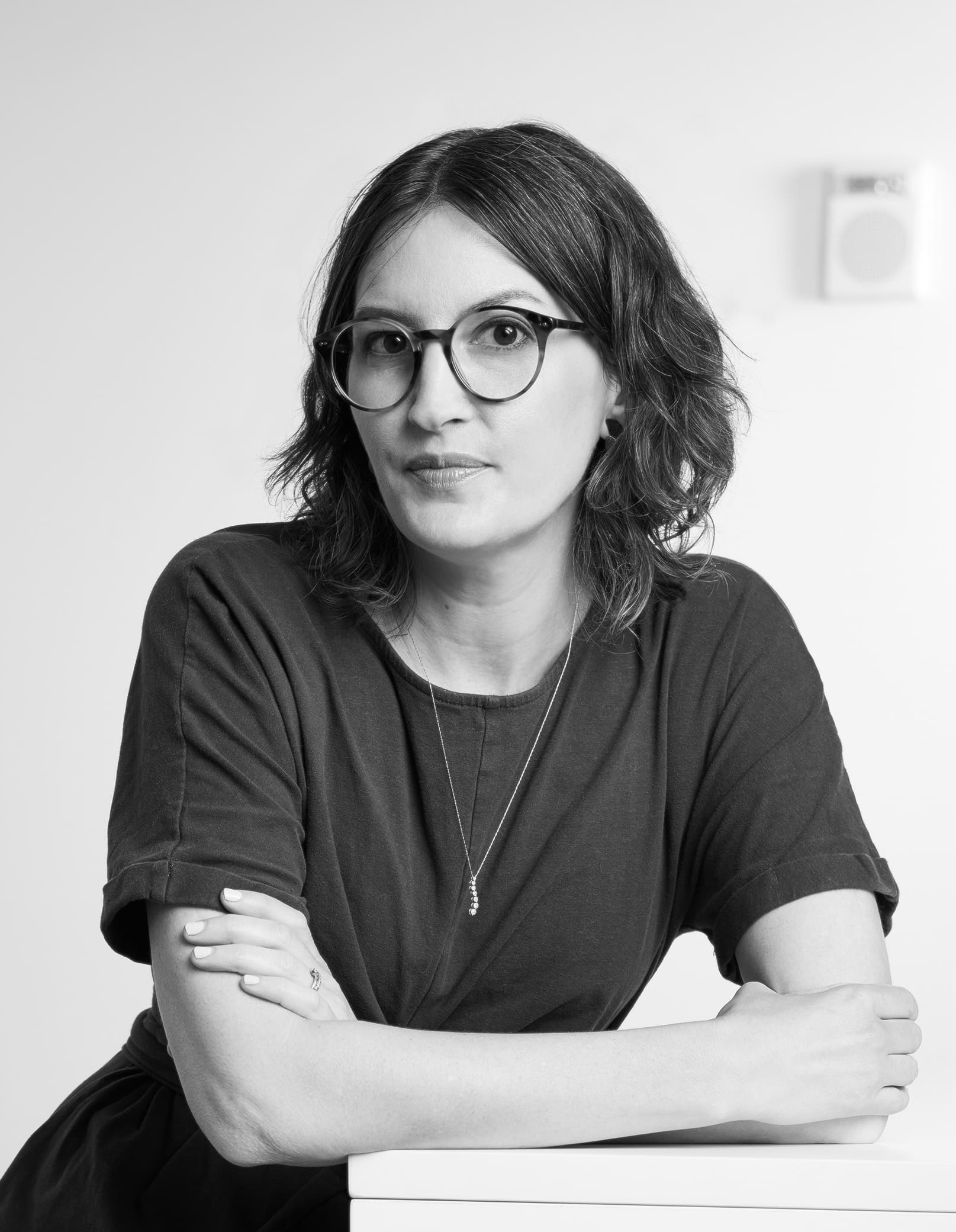
Liz Flyntz (she/her/hers)
UX Design Instructor
Contact Information
Research Interests: Collaboration, Video art, Digital media preservation, Archives, Information architecture, Interaction design, Media architecture, and Human Computer Interaction
Education: MFA
Liz Flyntz is a designer, curator, and artist whose practice investigates how information shapes human experience. Her work operates at the intersection of speculative design, archival research, and collaborative practice, often employing historical materials to examine complex systems and envision alternative futures. Through Program, her design studio, she creates varied works that range from experimental film titles to interaction and information design projects. Previously, Liz was the Director of UX and Design at DOOR3, a NYC-based software development company.
Flyntz's curatorial and artistic practice is often collaborative, examples include the Ant Farm Antioch Art Building Creative Preservation Initiative (AFAAB — aka the punk preservationists) and Epicurean Endocrinology, which explores the relationship between hormones and food systems. Her writing on video art, design, documentary, and architecture has appeared in publications including Afterimage, The Creators Project, and The Utopian Studies Journal. She co-edited and co-wrote The Present is the Form of All Life: The Time Capsules of Ant Farm and LST, a critical examination of the media art and architecture group Ant Farm's architectural and time-based works. Drawing from media theory and professional design experience, she developed “The Collaboration Agreement”, a methodological framework for collective creative practice.
She’s taught video art, UX and interaction design, portfolio development, photography, and curatorial courses and has delivered lectures on early video art history, time capsules, gift economies, and collaborative design methodologies at institutions including Universität Der Künste Berlin, NYU Tisch, and UT Austin. She holds an MFA in Media Study from SUNY Buffalo and studied at the Bauhaus University in Weimar.